


A leading Sussex arts charity needed WiFi that could support hundreds of visitors during seasonal festivals, across a historic farmhouse, walled garden and four-acre grounds. Here is how we designed, installed and now maintain their distributed network.
At a glance
| Venue type | Visitor attraction and cultural venue (historic farmhouse, galleries, walled garden, wider grounds) |
| Location | East Sussex, UK (main site near Lewes; second site in Lewes town) |
| Site size | Historic farmhouse with outdoor grounds of approximately four acres, including a walled garden of around half an acre. Second site: indoor exhibition space, Lewes. |
| Peak demand | Hundreds of concurrent devices during open days and seasonal festival events |
| Services delivered | WiFi site survey, network design, indoor and outdoor AP installation, guest and staff separation, centralised monitoring, managed support |
| Timeline | Initial survey and installation: 2019. Second site expansion: 2022. |
| Support model | Fully managed: remote monitoring, firmware maintenance, pre-event health checks |
| Key result | Reliable WiFi across a wide indoor and outdoor footprint, stable during high-footfall event days, consistently maintained across two sites |
Related services
- Outdoor WiFi solutions
- WiFi site surveys and heatmapping
- Managed WiFi support and monitoring
- High-density and event WiFi
- Multi-site WiFi management
1. What was the client’s problem?
A leading Sussex arts charity runs a historic Bloomsbury era farmhouse, galleries and gardens as a public visitor attraction, hosting seasonal festivals, open days, talks and curated events throughout the year. For a long period, the site’s WiFi had struggled to keep pace with visitor expectations or the operational demands of busy event days.
Symptoms
- Coverage was weak and inconsistent, particularly outdoors.
- Signal relied almost entirely on the main building, leaving most of the grounds with little or no reliable connectivity.
- At peak times, such as open days and festivals, the network slowed sharply under the weight of concurrent connections.
- Staff moving across the grounds could not stay reliably connected.
Business impact
- Visitors experienced connectivity problems precisely when they were most engaged with the site, on the busiest public days.
- Staff found it difficult to use mobile devices and handheld equipment reliably across the estate.
- Each major event brought operational friction and reputational risk from a network that was not fit for purpose at scale.
The project became urgent as visitor expectations grew and the charity’s event programme expanded. The site needed a network designed to support hundreds of devices simultaneously, across both indoor spaces and a large, open outdoor environment.
Client requirements
- Strong, consistent WiFi across all public indoor areas and the wider grounds, including the walled garden.
- High capacity for peak event days, with no meaningful degradation under contention.
- Reliable roaming so visitors and staff could move freely without reconnecting.
- Central monitoring and management so the system could be maintained without requiring on-site technical resource for routine tasks.
Constraints
- The heritage character of the site meant installation routes needed careful planning and sympathetic execution.
- Multiple outbuildings and structures across the grounds created complex cabling and power challenges.
- Outdoor equipment would be exposed to the elements year-round.
- Installation needed to avoid disrupting public opening times.
2. What we carried out in the survey process
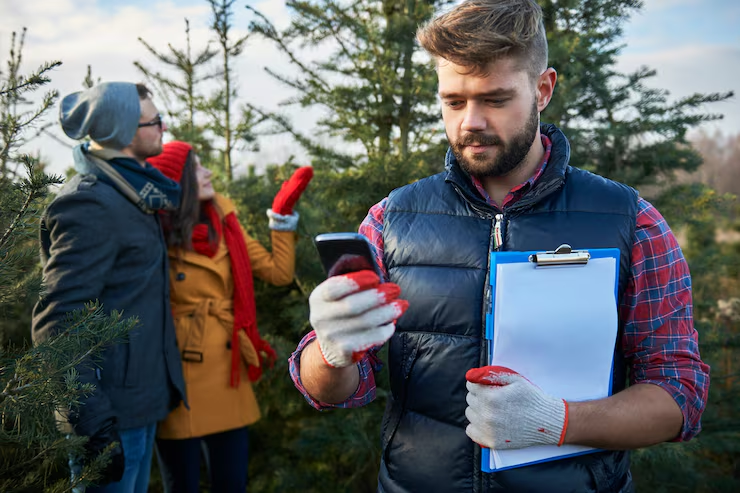
The survey gave us a complete picture of where the network was failing, why it was failing, and what a practical solution would look like across a complicated mixed indoor and outdoor environment.
What we checked
- Existing network layout: where signal was being generated and how far it was reaching indoors and outdoors.
- RF performance walkthrough: signal strength and coverage drop-off across indoor visitor areas, the walled garden and the wider grounds.
- Contention risk assessment: how the existing setup would behave under the peak device loads typical of busy festival days.
- Candidate AP locations: indoors within the farmhouse and gallery spaces, outdoors across the grounds, and within secondary buildings and outbuildings.
- Practical cabling routes: identifying structurally feasible paths for data and power across the estate.
- Power availability: locating suitable switch and cabinet positions at sensible distribution points.
- Environmental considerations: assessing exposure risks for outdoor hardware and cabling.
What we found
The root cause was a fundamentally single-origin network. All WiFi was being generated from the main building. That worked, just about, for visitors inside the farmhouse. It did not work for anyone in the grounds, the walled garden, or the outbuildings.
There was also a structural capacity problem. The existing setup had no realistic path to supporting high device counts during events. Even with stronger transmitters at the main building, the design could not have scaled. The site needed distributed coverage points, not a louder single source.
Risks and how we mitigated them
| Risk identified | How we mitigated it |
|---|---|
| Under-provisioning for peak contention causing repeat failures on event days | Designed for distributed AP placement with appropriate capacity per zone |
| Outdoor equipment exposed to weather and physical damage | Specified outdoor-rated hardware at exposed positions |
| Long cable runs creating power delivery problems and single points of failure | Introduced an additional comms cabinet and PoE switching in a secondary building to shorten runs and distribute power delivery |
| Installation disrupting public access during the venue’s open season | Phased the installation to minimise impact on opening days |
3. The solution we provided
We designed and installed a distributed WiFi network across the full estate, combining indoor and outdoor access points, structured cabling to secondary buildings, and a second comms distribution point, giving the charity a network capable of handling large visitor numbers on event days and easy to monitor and maintain year-round.
Network design and AP placement
The core of the solution was distributing coverage properly. Rather than attempting to extend the reach of a central point, we placed access points at appropriate locations throughout the site: inside the farmhouse and gallery spaces, at outdoor positions covering the walled garden and key visitor areas, and within secondary buildings across the grounds. Where outdoor long-range coverage was needed, we specified hardware suited to that role.

Extending the network to secondary buildings
Getting reliable power and data to remote access points across a four-acre estate is not straightforward. Rather than running single long cable runs from a central location, we ran structured, shielded external cabling to a secondary building at a more central point within the grounds. There, we installed an additional comms cabinet with PoE switching, which then served multiple access points across the surrounding area from a closer, more resilient distribution point.
This approach reduced individual cable run lengths, improved reliability, and gave the network a more logical physical architecture for a site of this size.
Guest and staff network separation
We configured separate SSIDs for guest and staff usage, with appropriate network segmentation between the two. This protects staff-side performance and security while giving visitors a clean, straightforward connection experience.
Monitoring and alerts
The full estate was on-boarded to our centralised management portal, with alerting configured for device health and key performance indicators. Any issue can be identified and addressed before it affects visitors or staff on the ground.
Why this approach rather than alternatives: A single high-powered access point at the main building would not have solved the problem. The outdoor distances involved, combined with the event-day device counts, made distributed coverage the only viable path. The additional comms cabinet was a practical choice that avoided the cost and complexity of fibre at this stage while achieving a reliable distributed design.
Implementation and go-live
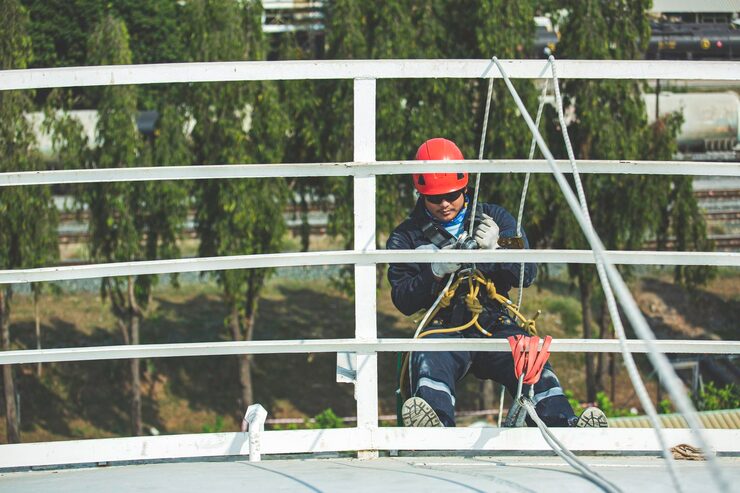
- 2019: On-site survey and design finalised. Phased installation carried out to avoid disrupting public opening times. Indoor APs installed first, followed by structured external cabling to the secondary building and installation of the additional comms cabinet and PoE switching. Outdoor APs commissioned and tuned. Full network tested under load before sign-off.
- Handover: Staff received an operational overview covering SSIDs, basic day-to-day use and how to raise a support request. Documentation provided covering network layout, escalation paths and routine guidance.
4. The aftercare
The charity receives a fully managed WiFi service, meaning that day-to-day network health, firmware maintenance and any required changes are handled by Carden Hotspots, without the charity needing internal technical resource to manage the infrastructure.
- Remote monitoring: The network is monitored continuously via our centralised management portal. Alerts are configured for device health and key performance indicators, so we are aware of any issue as soon as it appears.
- Planned maintenance: Firmware updates and configuration maintenance are applied on a planned basis, with timing agreed to avoid impact on open days or events.
- Pre-event support: For major festivals, open days and high-footfall events, we carry out pre-event health checks remotely. On-site attendance is available where required.
- Changes and requests: Any changes to the network are submitted via the agreed support channel, logged, assessed and implemented with appropriate change control.
- Staff onboarding: The venue’s team has a straightforward operational guide and a clear escalation path for anything they cannot resolve themselves.
Phase 2: second site expansion (2022)
In 2022, we extended the solution to the charity’s second site, an indoor exhibition space in Lewes. The Lewes installation mirrors the SSID configuration and network structure of the main site, so returning visitors and staff who move between locations get a consistent experience without needing to reconnect or reconfigure their devices.
Both sites are managed centrally through the same monitoring portal, giving us visibility across the full estate from a single point.

Before and after
| Area | Before | After |
|---|---|---|
| Outdoor coverage | Weak or absent beyond the main building | Distributed across the walled garden and wider grounds |
| Peak event performance | Degraded sharply under contention | Stable during high-footfall open days and festivals |
| Staff connectivity | Unreliable across the grounds | Consistent across indoor and outdoor areas |
| Network monitoring | None | Centralised remote monitoring with health alerting |
| Multi-site consistency | N/A (single site) | Consistent SSIDs and configuration across both locations |
| Ongoing management | Ad hoc | Fully managed with planned maintenance and pre-event checks |
Frequently asked questions
How do you provide WiFi across large outdoor grounds without fibre?
Can the network handle hundreds of devices during a festival?
Do you work on heritage or historic properties?
What happens if an access point fails during a busy event?
Can you manage WiFi across more than one site from a single portal?
Want the same outcome?
If your venue relies on WiFi to support visitors, staff or events, and you are not confident it will hold up when it matters, a professional survey is the right place to start.
We survey the site, identify the real cause of the problem, and design a solution that fits the environment, not just a generic template.
Ideal for
- Visitor attractions and heritage properties
- Arts venues, galleries and cultural organisations
- Event venues and festival operators
- Multi-site operators
- Any venue where unreliable WiFi is affecting visitor or staff experience


